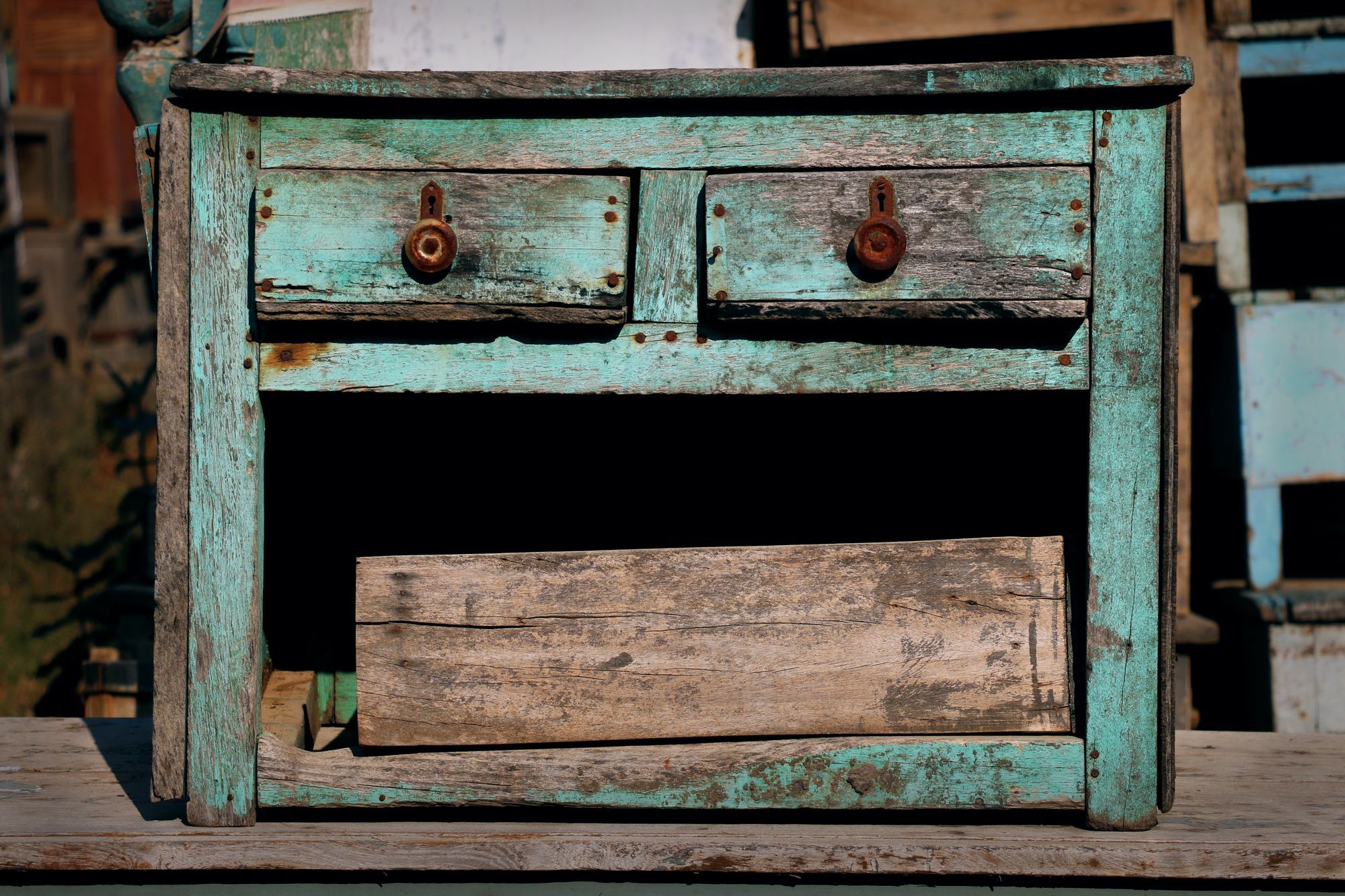
An old finish is thin and, in places, fragile. It has survived decades of use, and it can survive many more if it is treated gently. The safest routine is also the simplest one.
Dust first, and often
Dust is abrasive. Wiped across a surface with pressure, it acts like very fine sandpaper. Use a soft, dry, lint-free cloth and light strokes along the grain. A soft brush gets into carving and mouldings without catching on raised edges.
Avoid spray polish
Most spray polishes contain silicone. It gives an instant shine, but it builds up over time into a cloudy film, attracts dust, and gets into the wood itself, which makes any later re-finishing much harder. If a piece has been polished this way for years, tell us when you send photographs; it changes how we approach it.
Water sparingly, if at all
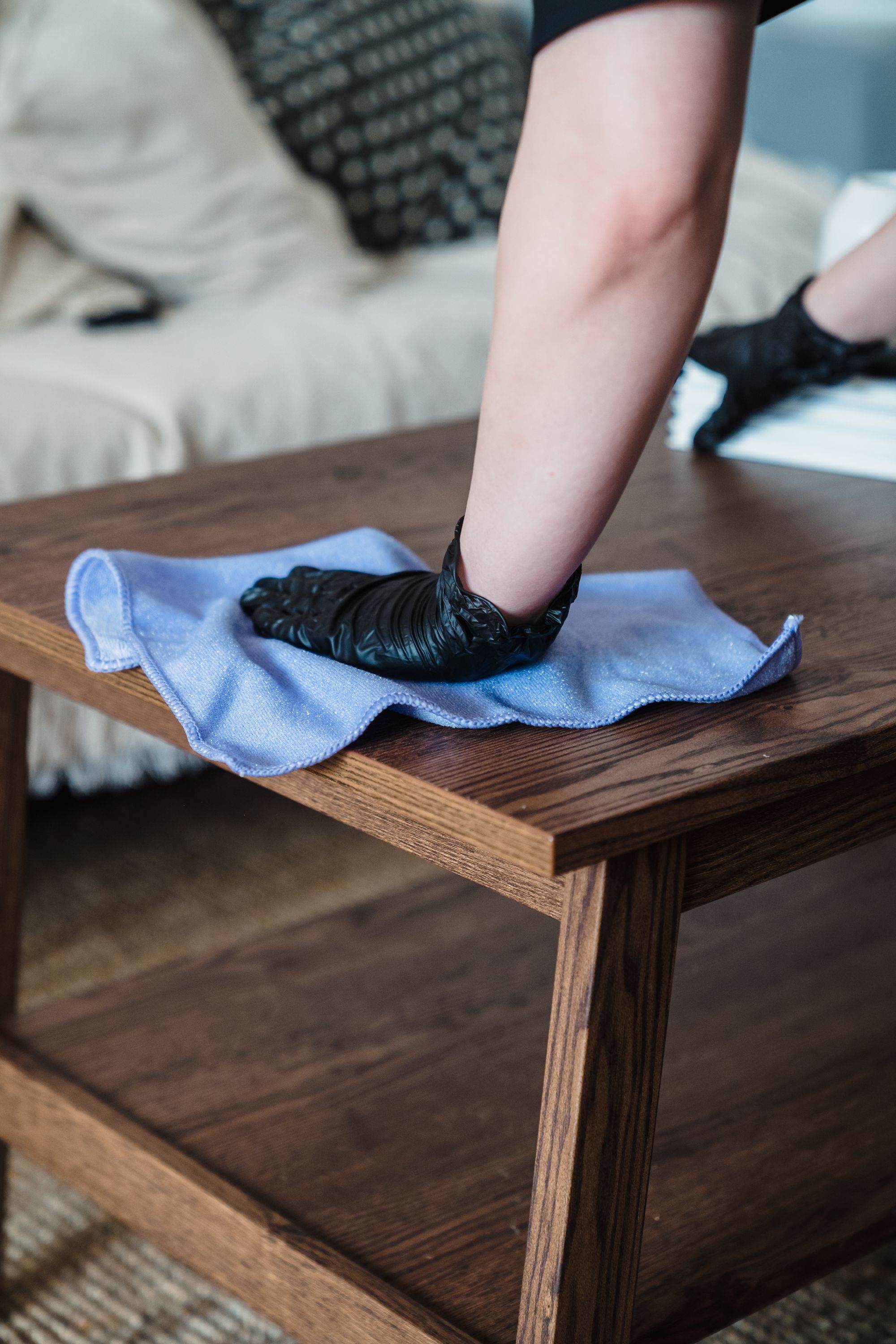
For grime that dusting will not shift, a cloth that is barely damp with clean water is usually enough. Wipe a small area, then dry it immediately. Never let water sit on the surface or run into joints.
Wax, occasionally
On waxed and French polished furniture, a thin coat of good paste wax once or twice a year protects the surface and gives a soft sheen. Apply very little, let it dry, and buff it off. Too much wax leaves a sticky surface that holds dirt.
What not to use
Household cleaners, vinegar, alcohol wipes, abrasive pads and anything described as a stripper or restorer. These all work by dissolving or cutting into the surface, which on an old piece is exactly what you want to keep.
When cleaning is not enough
White rings, sticky or crazed finish and dark grime that will not lift are signs the surface needs professional attention. Send photographs and we will tell you whether it can be cleaned and revived or needs more.